
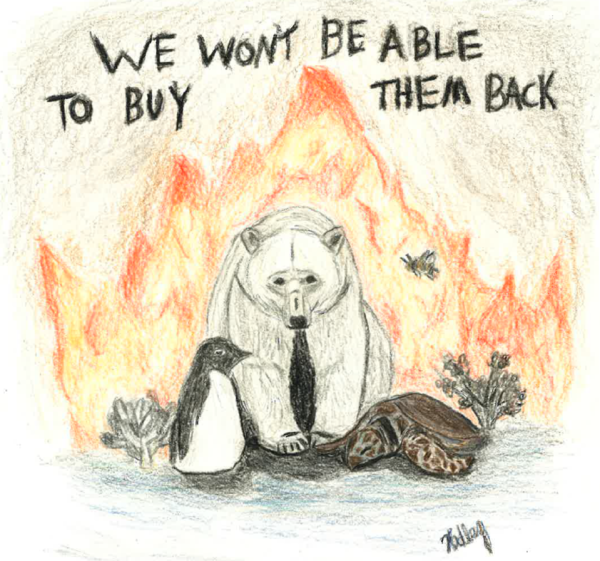
Extreme temperature swings and rising environmental damage have become increasingly common in the United States, with scientists pointing to climate change as a major contributor.
Recently, the Midwest has experienced strangely warm weeks during November, reaching 60 degrees followed by abrupt drops into the 20s. These fluctuations are accompanied with more frequent occurrences of natural weather events like tornadoes and droughts, which many believe is the result of climate change.
It isn’t just the Midwest that is being affected. According to the National Oceanic and Atmospheric Administration (NOAA), there has been an above average intensity of hurricanes since 2000. This year alone, three category 5 hurricanes have already occurred, compared to 2003 which only had one. Alongside that, the record for the hottest global year was set on July 22, 2024, following previous records in 2023 and 2016, reflecting a clear rise in temperatures over the past decade.
Researchers say global warming is a driving factor behind these trends. The Environmental Protection Agency (EPA) reports that excessive greenhouse gas emissions are directly related to climate change. When more carbon is released than can be naturally absorbed, it accumulates in the atmosphere and traps heat. Industrial production, fuel-based transportation and electricity generation are all factors contributing to greenhouse gas emission. As the world becomes more urbanized, the emissions are only expected to increase.
“The water cycle is changing because of the warmer atmosphere global warming has created, leading to evaporation of water, causing these storms and temperature changes,” Michigan State University environmental science major Emma Larkin said.
However, scientists also note that natural climate cycles play a significant role. El Niño and La Niña, naturally occurring weather phenomena that change ocean temperatures based on wind patterns, also influence global weather. During these phases, the western Pacific tends to warm while the eastern Pacific cools, affecting storm activity and temperature distribution. Monthly studies performed by Columbia Climate School indicate that conditions are now moving into a La Niña phase following the El Niño event of 2024, helping explain why the unusually hot summer has been followed by a very cold winter.
As climate shifts intensify, their everyday effect has become more noticeable, influencing work conditions, outdoor activities and industries that rely on seasonal climates.
“While practicing for Color Guard, I wasn’t used to being in such extreme heat and doing so much cardio,” Color Guard member and sophomore Hailey Hernandez said. “I almost passed out many times.”
Beyond individual experiences, some warn that the impacts will affect more than just feeling uncomfortable in the extreme temperatures.
“We could see more droughts,” science teacher Amanda Dekker said. “The last couple of summers we’ve had weeks without rain, which has a huge impact on us around here with all the farming land. We’re more likely to have wildfires, especially in corn fields.”
According to the Center for Climate and Energy Solutions, the number of wildfires have doubled since 1984, the majority of which are due to climate change or drought. In 2020, five of the six largest fires recorded burned in California and Oregon, resulting in tons of wildlife and infrastructure loss costing up to billions of dollars.
“If we keep going the way we’re going, we’re going to see more severe weather events and more extreme temperatures,” Dekker said.