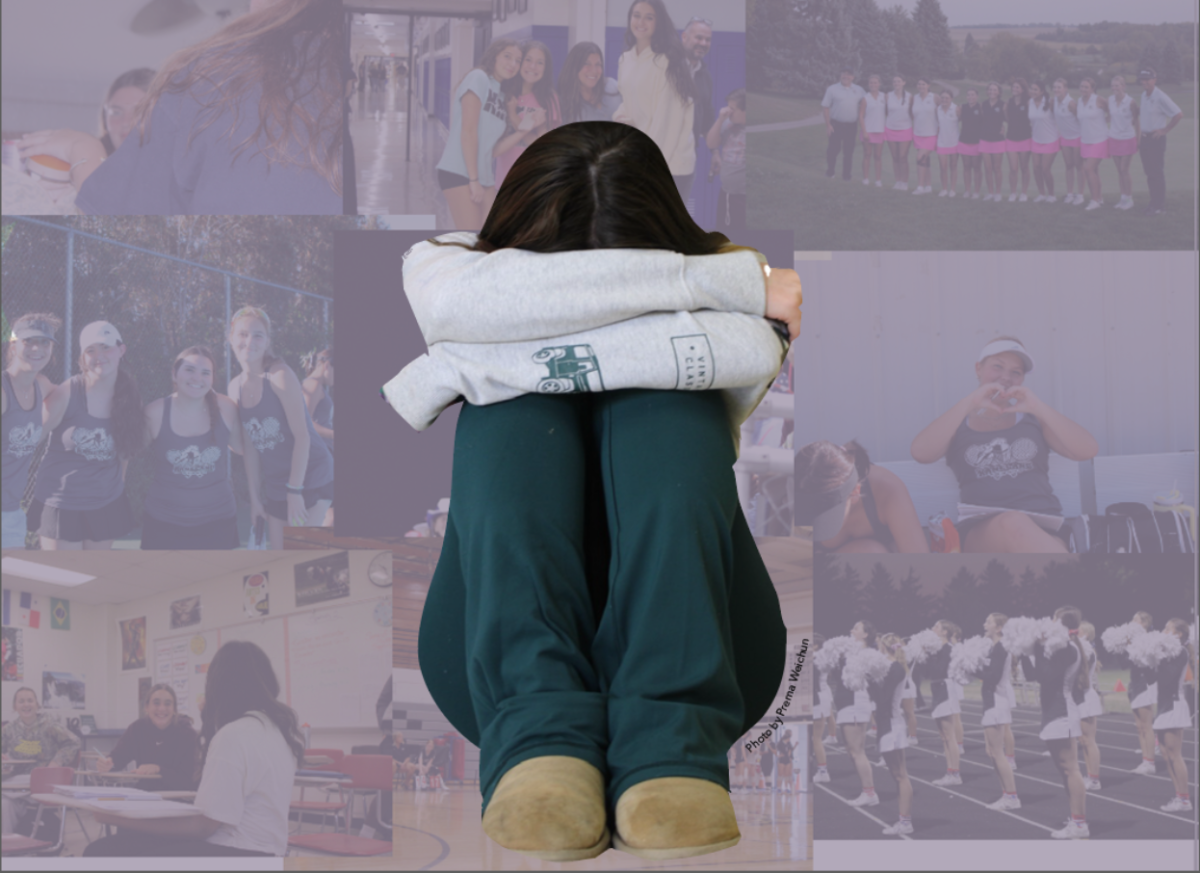
As students ourselves, we seek to write stories about things that other high schoolers will find interesting, relevant or helpful. For our advice stories in particular, we think about advice that we would want to have received at one point, or advice we think that our peers could use. But for this issue, we decided to ask students directly what advice they would like to hear, and as a staff, we answered a few of the most popular questions.
“How can I be more authentic to myself?”
Your life and experiences are so vastly different from the person next to you that trying to compare yourself to others or copy another person is nonsensical. Being yourself allows for more perspectives and personalities in the world, which leads to us learning and evolving. Taking the chance to try new things and stepping out of your comfort zone allows you to get to know yourself and your true interests. Understanding yourself comes with reflecting on your core beliefs free from the influence of others or from your own self-judgement. Don’t just stop there, though. Continue to go further into exploring who you are. Ask yourself why you believe what you believe or love what you love.
After you know more about who you are as a person, you must let go of the fear of being yourself. What sometimes holds us back from embracing our true selves is believing that the people around us will judge us. Stepping out of your comfort zone and experiencing first-hand that any judgement from others does not compare to the feeling of being you is probably enough to recognize the silliness of this fear. Additionally, people are often too worried about themselves and how they are being perceived to even notice you.
“How can I spend my time more wisely?”
You get home from school at 3:15 and decide that you deserve a break from the long day of learning you just had. You grab a snack, lay down in bed and get to scrolling. But, before you know it, hours have gone by and you haven’t even thought about any of the tasks on your ever-growing to-do list.
The first step to change is acknowledgement. Reflect on how you spend your free time. Is it spending extra time studying for a test, or is it playing video games? Then, identify your priorities and the habits you could benefit from cutting out. For some this may be getting a workout in and putting in extra hours at work instead of taking the after-school nap.
It is then a matter of planning. Block out a time in your day to ensure that you get your homework done, and block out another time to fit your workout in. Stick to your schedule, and when you find yourself straying from productivity, ask yourself, “Is this helping me get closer to reaching my goals?”
“How can I become more organized?”
Every time I go back to school, I pick out a brand new binder to hold six new folders. Year after year, these new binders get torn, thrown aside and act as an accessory to my failed attempts at being a good student. The question of “how to be more organized” evades me every single day.
I can sit here and lie to the masses by saying I have colored coded everything and alphabetized math homework, or I can tell you that my backpack is a mess. I have papers I don’t even remember the lesson for and four deodorants when I only use one. I am not an organizational guru. In fact, my backpack could probably be on Hoarders.
I’m not always like this. I can blame it on my brain all I want, but sometimes I contradict myself and get a random wave of energy to clean everything and make my space a Pinterest dream board. This proves to me that you don’t have to be a put together person to be organized. You have to want it. You don’t have to spend your days studying constantly to get good grades. Something I find unhelpful is the phrase, “You may not want to, but you have to eventually.” The times I find myself the most successful are the times I realize that I don’t have to do anything. I choose to be a good student. To make my teachers proud. To make my family proud. But most importantly, I want to make myself proud. Spend your time wisely in the sense that you find value in the things you are doing. Do what you know will help you. Be organized in the sense that you can recognize when you’ve given all you can to something. Remember you don’t have to work yourself black and blue to be a good student. You just have to want it.
“How can I study better?”
If you look online, there are tons of different answers that will come up. Not because they are all wrong, but because everyone is different. What helps you learn best might not be the same as the person next to you. However, there are a few scientific-backed methods that may be more likely to work for you.
Active recall is a method that forces you to pull the information out of the brain on your own. Any technique that utilizes this strategy has been shown to strengthen memory and improve the long-term knowledge of the information you’re studying. Utilize flashcards or free-response practice questions, or write down all the information you know about a topic.
One specific technique that falls under active recall is the Feynman Technique, which is the idea of teaching the information you’re learning to another person. Whether you pretend to explain the topic to a five year-old or if you present it to a friend, it forces you to truly know the information and easily identify the areas you fall short in.
Organizational and focus habits will also aid in the effectiveness of your study sessions. Put away your phone, or download an app that blocks other apps. Find a quiet, dedicated study spot. Use time management techniques like studying for a certain amount of time and then taking a break for a set time.