In 1739, an impending war began with James Edward Oglethorpe (British general and founder of the Georgia colony) inciting the Creek Indians to start harassing the Spaniards by promising rewards for Spanish scalps. This all began on the outskirts of St. Augustine, Florida. At this point, the British already had their plan of attack. Spain anticipated English colonies Spain anticipated English colonies so Spain, Havana and Vera Cruz brought out troops in preparation to defend themselves. With their success, they had a rare booming economy for the city and supplemented its defense. But during the winter of 1739-1740, food supplies in St. Augustine came up short, just as the British began their invasion of Florida, according to the National Park Service.
St. Augustine can be perceived for just being a city in Florida. But what people do not know is that St. Augustine is the first city that was ever colonized (even bef
ore the United States of America was). Throughout the troubled history of this city, only one structure remains the same. Castillo de San
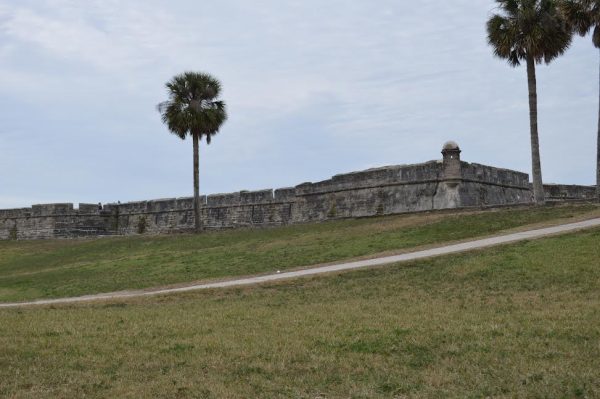
Marcos.
According to the NPS, Castillo de San Marcos was “originally built by the Spanish to defend Florida and the Atlantic trade route.”
Castillo de San Marcos has experienced years of constant adaptation. With this comes changes in culture and to the people who have influenced it over the years that makes history today.
“Castillo de San Marcos preserves the oldest masonry fortification in the continental United States and interprets more than 450 years of cultural intersections,” according to the park’s website.

Architecture is not the only thing that makes this city so special. Art is a big factor in how the city is seen today. Along with its architecture, art also represents the age, history and beauty of the city.
Aviles Street holds the title for the oldest street in America. With its monumental age, the art district is what makes this street so influential to this city.
According to Visit St. Augustine, Aviles Street has held its art district since the 1930’s when “the old Hamblin Hardware warehouse at 11 Aviles Street was transformed into a studio and gallery space.”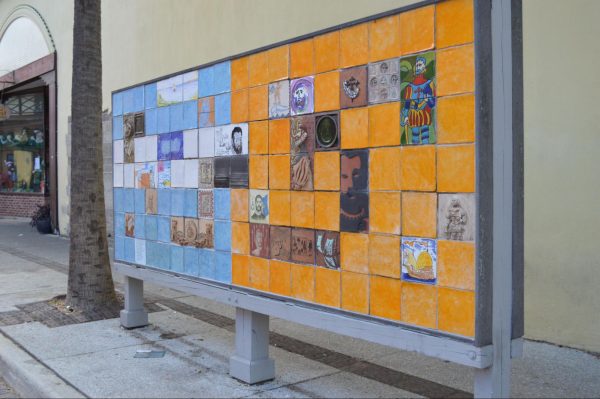
Not only is the age of this street seen in the art but also in its architecture, such as the brick streets and buildings. Brick streets and buildings are often misconstrued as just being of use to visitors and residents, but what many do not comprehend is that these streets have seen it all.
 Worn by hundreds of years of movement, the streets of St. Augustine reflect the city’s rich history and the countless stories shaped by generations of people who have come and gone.
Gilded Age industrialist Henry Flagler was responsible for lots of the architectural diversity in St. Augustine. With his Spanish revivals, Hotel Alcazar and Hotel Ponce de León were the resulting products of it. Flagler was a very influential key to bringing St. Augustine out of the shadows and into the Gilded Age.
Today, people see this as Flagler College but it was once known as the grand Hotel Ponce de León. Before this became a liberal arts college, it welcomed guests with luxury that this town had not presented before. 
“The Ponce was one of the first poured concrete buildings in the United States and was also one of the first buildings to have electricity,” according to the UFHSA Governor’s House Library. “Flagler wanted only the best for his hotels. The Ponce was built between 1885 and 1887, and opened on January 10, 1888. Around this time, Flagler decided to build another resort right across King Street, which he would name the Alcazar.”
 Previously known as Henry Flagler’s Gilded Age Hotel Alcazar (opened in 1888), the current Lightner Museum holds what once was the largest indoor pool in the world.
In the past, guests at Gilded Age Hotel Alcazar enjoyed the presence of the water with activities such as water polo and swimming races.
Today, the Lightner Museums holds a restaurant, Cafe Alcazar, and uses this space as a wedding venue.
The Bridge of Lions is more than just a bridge. With art that leaves guests not wanting to look away, the Bridge of Lions is what ties downtown St. Augustine to Anastasia Island.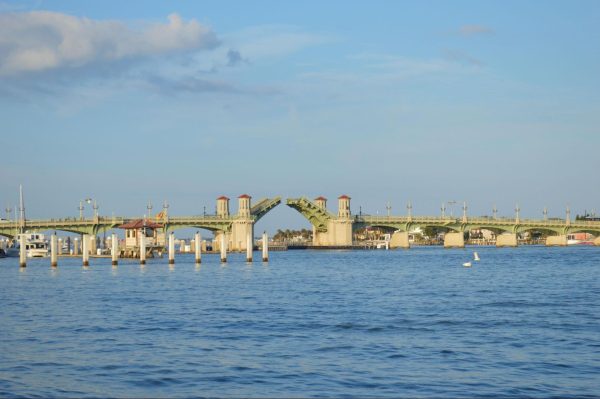
The design of this bridge was designed for more purpose in art than in transportation of cars, according to St. Augustine Ponte Vedra.
With the completion of this bridge in 1927, the drawbridge’s Mediterranean revival style represents European heritage before this city was colonized.
St. Augustine is known for lots of things: history, Spanish architecture and art. But many times guests visit just to look at the city from a tourist’s perspective and not for the importance of what this city holds for our nation. Stories were made, battles were fought and they all have led to St. Augustine’s prominence to this day.