What is and isn’t a president allowed to do? That has been a question everyone has asked themselves since George Washington first took office in 1789.
Since the beginning, the U.S. has had its fair share of presidents, many of which have made their own share of mistakes big or small, and every time, any mistake sparks that same question: Where is the line of a president’s power drawn? This is a question being asked most recently and frequently following the inauguration of President Donald Trump into his second term as President of the United States.
Since his inauguration into office this past January, President Trump has issued a flurry of executive orders across the board, from name changes to direct military action, both inside and outside of the U.S. But do these orders stand on solid ground?
Although the Constitution states that the president is the leader of the Executive branch, it does not state that this gives the president free reign to do whatever they please. Trump’s deployment of the National Guard in various U.S. cities is an example of an issue that was referenced in the Constitution
“The President shall be Commander in Chief of the Army and Navy of the United States, and of the militia of the several states, when called into the actual service of the United States…”, according to the language of the U.S. Constitution.
The National Guard, a service of both the entire U.S and its individual states, is according to the Constitution a “militia of the several states” (which is now well above several, of course). In the same section, it is said that the president has complete control only when called into the actual service of the U.S., something President Trump’s recent orders for the National Guard have lacked.
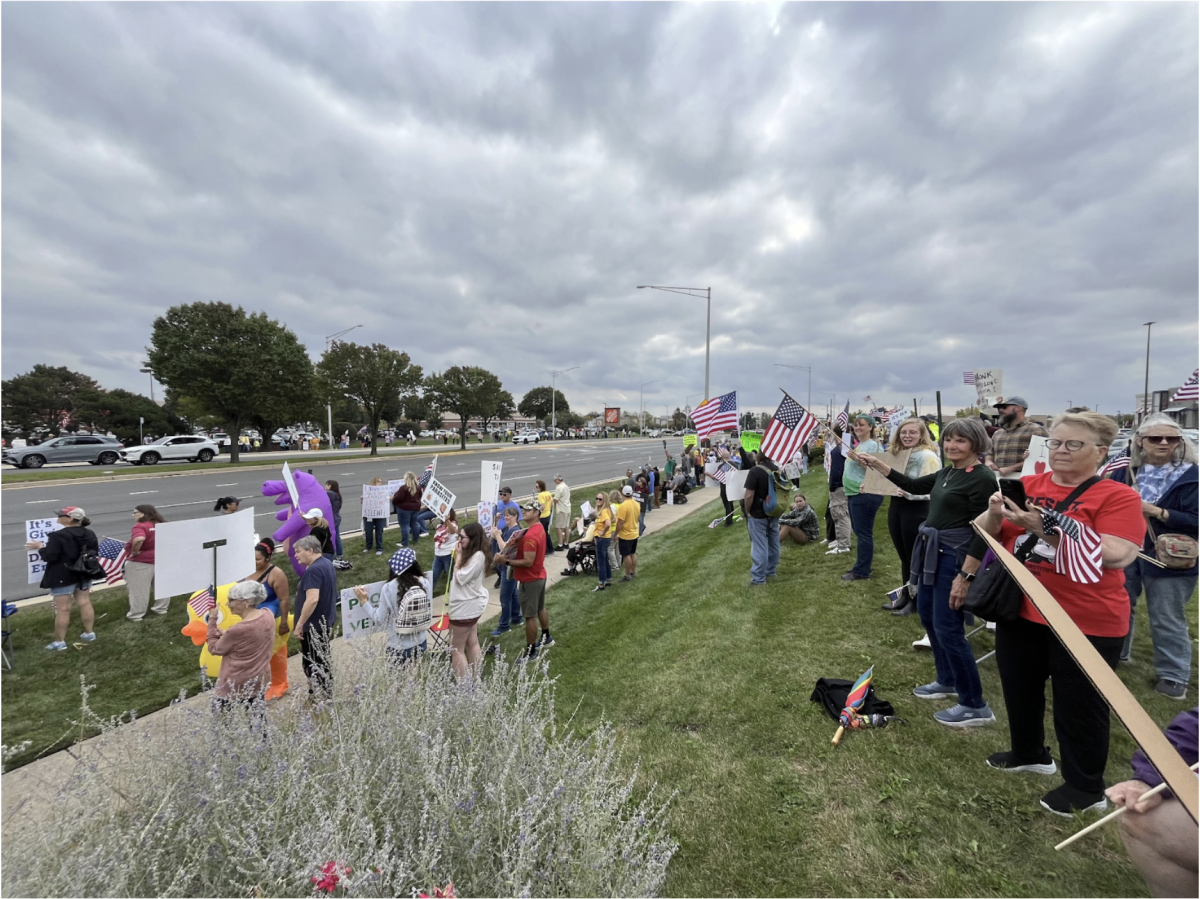
President Trump first deployed the National Guard in June of this year to Los Angeles, CA, in response to major protests against actions carried out by Immigration and Customs Enforcement (ICE) members.
The president has since sent the National Guard to Washington, D.C. and Memphis, TN, adding that he has wanted to target primarily Democratic cities as opposed to Republican. Orders of deployment were sent and blocked in cities such as Chicago and Portland, OR.
Aside from the actual executive orders given by the president, there is Trump’s actual lack of understanding of the Constitution, including what rights it does and does not give him as president.
“In a recent interview, President Trump responded to a question as to whether he had to uphold the Constitution with, ‘I don’t know,’” Devon Ombres of The Center for American Progress writes. “In the more than 150 executive orders (EOs) that President Trump has issued during the first four months of this term, he frequently asserts that he is acting under authority granted him by Article II of the Constitution. In fact, the Constitution is intended to limit the powers of the presidency, not provide nearly limitless authority as President Trump is contending.”
Stated here is what President Trump thinks is within his power, how those things actually are not, and what he does to try and prove his point. It seems that the last 10 months of President Trump’s second term have been a trial to see what he can and can’t get away with, something a president probably should not be doing.
On both inauguration days, President Trump took the oath that every president has before him, one that sets him in a position unlike any other, one that defines our country. Following his second inauguration, it is almost as if he is not keeping his word to that oath. It isn’t that he is under attack in any form from a particular group, but that he instead sees his own vision for the U.S., one that shouldn’t be within reach.
“The Constitution has survived 238 years because we, the people, have fought for it when it was threatened,” the American Civil Liberties Union (ACLU) writes. “Today, the danger is not from foreign invasion or civil war, but instead the methodical dismantling of Constitutional governance by a president sworn to uphold it.”
The methodical dismantling, unfortunately a reality, is coming true. It isn’t just because of a misunderstanding or small mistakes, but an actual attempt at recreating the government that has existed for centuries. What the Constitution did and continues to do seemingly doesn’t matter anymore because of a blurred line of a president’s power.
As citizens of the United States, it is important that we understand these issues and recognize the morals behind them. The Constitution would not have been around if peace and quiet was maintained, and in a time where it is under threat, there should not be peace and quiet.