Influencers have become some of the most powerful voices in teen life, and no one wants to state the obvious: They’re creating a standard that teens can’t live up to. Every scroll shows the same polished look – a perfect face, a perfect body, a perfect morning, a perfect house, a perfect everything. But somehow teens are expected to believe this is the ¨normal¨ we need to match.
It isn’t normal, and the numbers prove it.
The Pew Research Center reports that the percentage of teens who are online almost constantly has nearly doubled since 2014, rising from 24% to 46% today. Almost half of teens live in a nonstop cycle of influencer content, whether they want to or not. TikTok – the platform where staged, aesthetic, perfect-life videos dominate – is used by 67% of teens, and 16% say they scroll on TikTok almost constantly. Even more alarming, 54% of teens say they would struggle to give up social media. That level of dependence doesn´t happen by accident. It happens because influencer culture has taken over the way teens think about how they should look, how they should act and what their life should consist of.
Students see and feel this pressure every single day.
¨Influencers fake what they’re showing,” freshman Lauren Sharp said. “They make their life look perfect and like they have no mistakes.¨
When perfection becomes the expectation, reality doesn´t stand a chance. Real life isn’t filtered or edited. When the standard is what influencers present, normal life suddenly feels like it´s missing something.
Freshman Brody Johnigk sees it the same way.
¨On camera, it looks like they have this awesome life, but behind the scenes it’s not how it really is,¨ Johnigk said. ¨They make it seem like every teenager should be like them and have all the things they have, even when it’s not real.¨
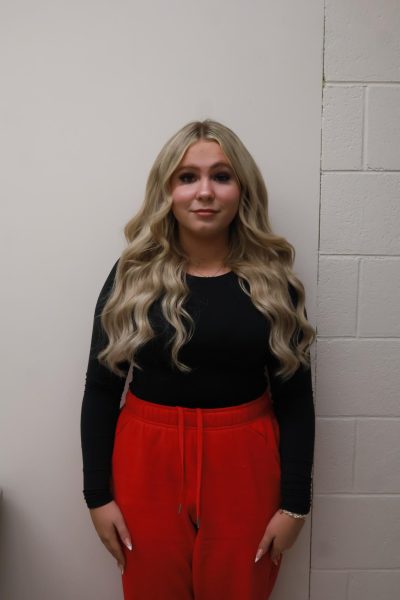
I´ve felt that same pressure firsthand, and pretending I haven’t would be a lie. I’ve compared myself to influencers more times than I’m able to count. Their perfectly straight, shiny and impossibly long hair pops up on my phone, and I start picking at my hair. I’ve gotten hair extensions because it felt like that’s what I needed to do to keep up with the beauty standards that I saw every day online. That decision didn’t come from a lack of self-confidence; it came from comparison.
Influencer culture does not stop at looks. It pushes fake routines, fake productivity and fake lifestyles. The “day in my life” trend loves to show spotless rooms, 5 a.m. workouts, color coordinated planners and green juices. But in reality, what’s behind those videos is less glamorous: staged angles, repeated takes and heavy editing.
“Some influencers fake their ‘day in the life’ videos to make their lives look more perfect than they really are,” Sharp said.
Johnigk also called out the food related fakeness.
“The ‘what I eat in a day’ videos are totally unrealistic,” Johnigk said. “They show the tiniest snack on camera, but off camera they’re eating way more.”
Teens end up comparing themselves to perfection – something no one can achieve. Influencers present a fake life, and teens accept it as reality.
“Influencer culture constantly tells teens what they should be. There isn’t much space for them to form their own identity anymore,” Special Education teacher Angela Bradley said.
Some people argue that influencers are motivational or that they inspire people. Motivation doesn’t mean much when it’s built on filters, sponsorships, Facetune and a lifestyle staged for views. When images are edited, when routines are faked and when everything is designed to look effortless, it stops being motivation and becomes manipulation. Teens don’t need inspiration that leaves them feeling behind. They need authenticity – something social media abandoned awhile ago.
Influencers aren’t harmless entertainment. They shape the way teens think they should look, what they should buy and how their lives should end up. They set standards that are impossible to reach because even the influencers themselves can’t maintain them without editing, retakes, filters, money and pressure.
Teens don’t just see the content; they compare themselves to it. Constantly. When nearly half of teens are online so consistently and more than half admit they couldn’t give up social media even if they tried, it’s clear that influencer standards aren’t just part of teen life. They are controlling it.
It’s time to admit the truth: the lives influencers show us aren’t real. They’re built, created and performed for an audience. Real teens shouldn’t be comparing themselves to something that was never honest to begin with.
Real life isn’t flawless. Real life isn’t filtered. Teens deserve to know that the perfect lives they see online are not reality, no matter how convincing the editing is.